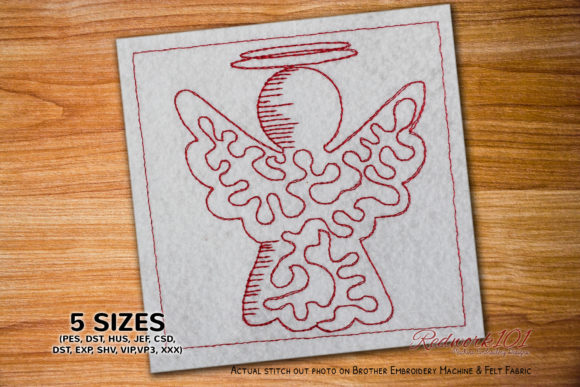
Christmas Angel Redwork: A Designer’s Holiday Review
As an embroidery designer who spends the better part of autumn planning for the holiday rush, I approach every new machine embroidery design with a critical eye. It is not just about whether the motif is pretty; it is about how it performs on real fabric, how it appeals to tired shoppers looking for the perfect handmade gift, and how it holds up under the stress of seasonal production. Recently, I reviewed Christmas Angel Redwork for potential inclusion in my upcoming winter collection. This piece stands out not for complexity, but for its timeless simplicity and versatility across various product lines.
The First Impression: Nostalgia Meets Minimalism
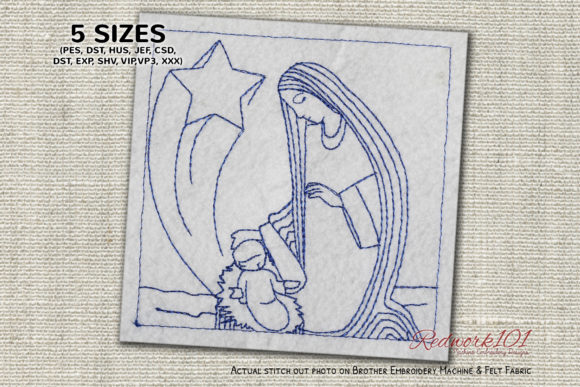
When I first loaded the digital embroidery file into my software, the immediate feeling was one of quiet elegance. In a market often saturated with overly complex, high-density designs that can pucker delicate fabrics, this angel offers a breath of fresh air. The redwork style—traditionally stitched in a single color, usually red, on white or cream fabric—evokes a deep sense of nostalgia. It feels rustic yet refined, capturing the spiritual and cozy essence of the season without shouting for attention.
The emotional tone here is gentle. It is not playful or cartoonish; rather, it feels premium and traditional. For buyers seeking a personalized gift that feels heirloom-quality, this aesthetic hits the mark. The detail level is moderate, relying on clean lines and open spaces rather than dense fill stitches. This makes it an excellent candidate for seasonal embroidery projects where speed and consistency are key. The optional box stitch mentioned in the description adds a modern framing element, allowing creators to customize the look depending on whether they want a standalone motif or a bordered patch style.
Strategic Product Applications for Holiday Sales
For Etsy sellers and small business owners, versatility is profit. I tested the visual potential of Christmas Angel Redwork across several common holiday products. Here is how it performs in real-world scenarios:
- Sweatshirt Embroidery: On a cream or heather grey sweatshirt, the red thread pops beautifully. Because the design is not overly dense, it sits flat against the fleece without causing stiffness, making it comfortable for all-day wear during family gatherings.
- Kitchen Towel Embroidery: This is perhaps the strongest use case. Redwork traditions are rooted in home linens. Stitching this angel on a waffle-weave or flour sack towel creates an instant bestseller for hostess gifts.
- Tote Bag Design: Canvas totes benefit from the bold contrast. The angel serves as a focal point that is easily recognizable from a distance, ideal for craft fair displays where you need to catch a shopper’s eye quickly.
- Pillow Cover Accents: Placed on the corner of a linen pillow cover, the design adds a subtle festive touch that doesn’t overwhelm a living room’s decor. It allows customers to keep their holiday decorations up longer because the design is elegant rather than kitschy.
- Embroidered Patch: If you stabilize correctly, this design works well on felt or twill for iron-on patches. These can be sold as add-ons or used to customize denim jackets and hats.
When creating printable mockup graphics for your online shop, remember that the simplicity of this design photographs exceptionally well. It does not get lost in shadows or glare, which helps increase click-through rates on social media previews.
Technical Considerations and Stitch Performance
While the design is user-friendly, there are technical nuances every embroiderer must consider. The product description notes that the outer box stitch is optional and may appear in a different color in some previews. This flexibility is a double-edged sword. If you choose to include the box, ensure your machine’s color change sequence is programmed correctly to avoid unnecessary trims if you are running multiple units.
Stitch density is generally low in redwork styles, which is great for speed but requires attention to stabilizer choice. On stretchy garments like t-shirts or baby onesies, a cut-away stabilizer is non-negotiable to prevent distortion over time. For woven fabrics like kitchen towels or pillow covers, a tear-away stabilizer usually suffices, but always test a sample first.
One area requiring caution is fabric texture. On thick, plush towels, the fine lines of the angel’s wings or face might get lost if the pile is too high. I recommend using a water-soluble topping to keep the stitches sitting on top of the fibers. Additionally, if you are stitching on dark fabric, the traditional red thread will not show. You would need to switch to white or gold thread, which changes the "redwork" definition but maintains the design’s integrity. Always check your thread colors against your fabric swatches before committing to a large batch.
Navigating Hoop Sizes and Detail Clarity
Since specific hoop size dimensions were not explicitly provided in the brief, it is crucial to check the file details before purchase or use. However, given the nature of redwork angels, this design likely fits comfortably in a 4x4 or 5x7 hoop. If you are attempting to scale it down for smaller items like ornaments or baby bibs, be wary of losing detail. Tiny lettering or intricate facial features can become a blob of thread if the design is reduced too much. Conversely, scaling it up too large for a blanket might expose the individual stitch paths, breaking the illusion of a continuous line.
For those considering commercial embroidery runs, consistency is key. Ensure your needle is sharp and appropriate for the fabric type to prevent skipped stitches, which are more noticeable in open, linear designs than in dense fills. If you are using metallic thread for a premium look, slow your machine speed down significantly. Metallic thread is fragile, and the turns in the angel’s robe or wings could cause breakage if rushed.
Boosting Seasonal Appeal and Brand Trust
Incorporating Christmas Angel Redwork into your lineup does more than just add a product; it enhances your brand’s perceived value. Holiday shoppers are often stressed and looking for trust signals. A clean, well-stitched angel suggests quality and care. It implies that your small shop product is made with intention, not just mass-produced haste.
This design supports various marketing angles. You can bundle it as part of a "Nativity Collection" or pair it with other redwork motifs for a cohesive "Vintage Christmas" line. It appeals to buyers looking for holiday embroidery that respects tradition while fitting into modern minimalist homes. By offering this on diverse items—from aprons for the baker in the family to tote bags for the student—you widen your customer base without needing to create entirely new designs.
Ultimately, the success of this design lies in its adaptability. It is a safe yet sophisticated choice for the holiday season. Whether you are an experienced decorator or a novice crafter, Christmas Angel Redwork offers a reliable path to creating beautiful, sellable items. Just remember to verify the specific file formats and licensing terms provided by the creator to ensure you are compliant for commercial sales. With proper testing and thoughtful presentation, this angel can truly soar in your seasonal shop.